

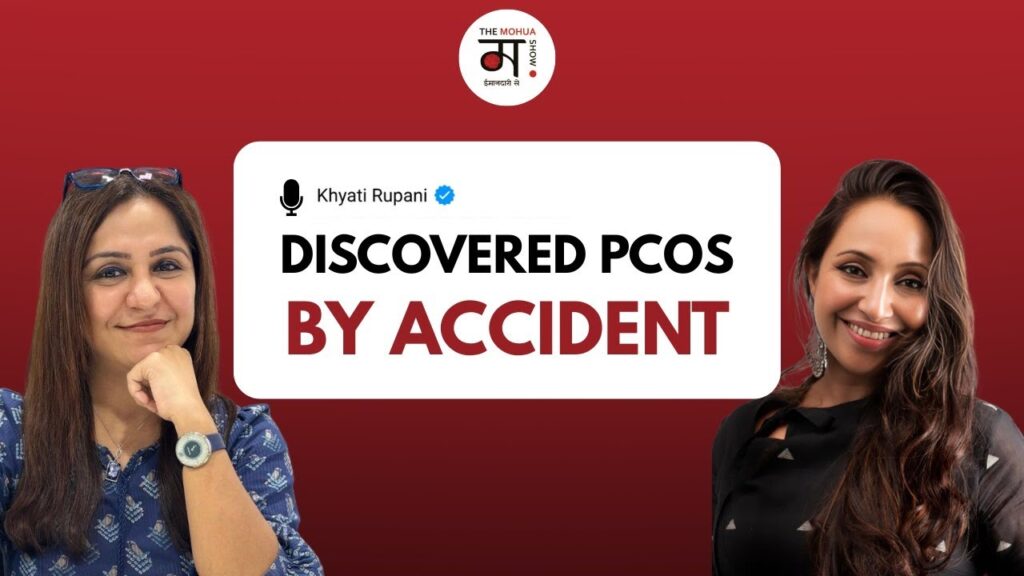
PCOS in India is no longer a niche health topic. It is one of the most common hormonal conditions among women of reproductive age, and one of the most misunderstood. Missed periods get dismissed, acne gets blamed on stress, and “just lose weight” gets offered as the whole treatment.
Episode 253 of The Mohua Show, “PCOS, Hormones & Sustainable Weight Loss” with Khyati Rupani, takes the topic head-on. This article gives you the background: what PCOS is, what the largest Indian study found, and what sustainable management generally involves.
Medically reviewed by: [add name and qualification]. This article is general information, not medical advice.
What is PCOS, and how is it diagnosed?
Polycystic ovary syndrome is a hormonal and metabolic condition. Under the widely used Rotterdam criteria, a diagnosis generally requires two of three features: irregular or absent ovulation, signs of high androgens (such as acne, excess facial or body hair, or scalp hair thinning), and polycystic ovarian morphology on ultrasound. A doctor also rules out other conditions that look similar.
In India, many people say PCOD. Clinicians generally use PCOS, so use that term when you speak to a doctor.
Common PCOS symptoms
- Irregular, infrequent or missed periods
- Acne or oily skin
- Excess hair on the face or body, or thinning of scalp hair
- Weight gain, especially around the middle
- Difficulty conceiving
Symptoms vary a lot. PCOS does not always mean weight gain either: it can occur in lean women too.
What the biggest study on PCOS in India found
The ICMR-PCOS Task Force study, published in JAMA Network Open, enrolled 8,993 women aged 18 to 40 from eight states across five zones of the country. Its conclusion was that PCOS is highly prevalent in India and that most affected women had at least one metabolic problem alongside it.
One reason prevalence figures differ so widely is the diagnostic criteria used. In a smaller study of 518 adolescents and young women, the prevalence was 8.1% by Rotterdam criteria but only 2.1% by NIH criteria. When you see a headline number for PCOS in India, check which criteria were used.
Add the study’s headline prevalence figure from the paper itself before publishing.
Why PCOS in India is also a metabolic issue
PCOS is closely linked to insulin resistance, and affected women face a higher risk of problems such as impaired glucose tolerance, abnormal cholesterol and fatty liver. This is why many doctors treat it as more than a reproductive condition. It is also why early diagnosis matters: managing the metabolic side early can reduce long-term risk.
What sustainable management looks like
International guidelines place lifestyle measures first: a balanced diet, regular physical activity, adequate sleep and stress management. Medical treatment is then tailored to the symptoms and to whether you are trying to conceive. Three points are worth stating plainly:
- Sustainable beats drastic. Crash diets and miracle supplements tend to fail and can make things worse.
- Weight is one signal, not the whole picture. Cycle regularity, energy, skin and metabolic markers all matter.
- Treatment is individual. A plan that suits one woman may not suit another, so work with a qualified doctor or dietitian.
Episode 253 explores this sustainable approach with Khyati Rupani. Add two guest takeaways and timestamps here.
When to see a doctor
See a doctor if your periods are consistently irregular, absent for several months, or if you have persistent acne, unwanted hair growth, hair thinning or difficulty conceiving. Getting a proper diagnosis is the first step to getting the right care for PCOS in India or anywhere else.
FAQ
What causes PCOS?
The exact cause is not fully understood. Hormonal imbalance, insulin resistance and genetics are all thought to play a role.
Can PCOS be cured?
There is no cure, but symptoms can be managed well with lifestyle changes and medical care.
Do only overweight women get PCOS?
No. Lean women can have PCOS too, although weight can influence how severe symptoms are.
Is PCOS the same as PCOD?
The terms are often used interchangeably in India. Clinicians generally use PCOS.
Listen to the full conversation
Hear PCOS, Hormones & Sustainable Weight Loss ft. Khyati Rupani (Episode 253) on Spotify, Apple Podcasts or YouTube.
Sources: ICMR-PCOS Task Force study, JAMA Network Open (via PMC and Amrita/SKIMS summaries); Journal of Diabetology (Jan 2021), prevalence among adolescents and young women in India; PMC editorial on PCOS as a metabolic disorder.
Verify before publishing: the study’s headline prevalence; the guideline wording against the 2023 international PCOS guideline; the medical reviewer’s sign-off.