
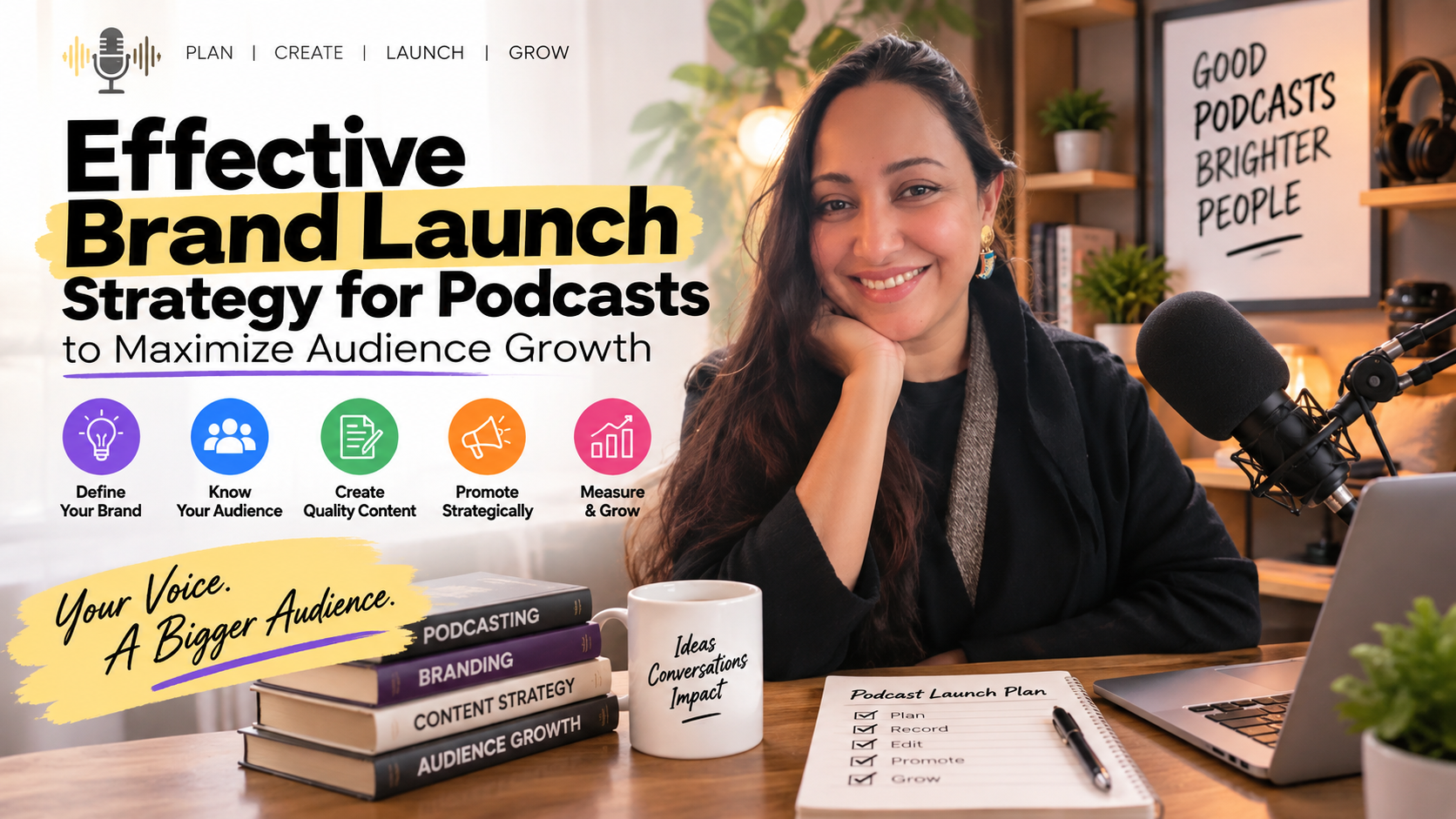
Brand launch strategy for podcasts is where most new shows make their biggest mistake. They spend months recording, editing, and designing, and then they publish episode one with a post on Instagram and wait for listeners to arrive. They do not. A podcast launch is not a publishing event. It is a campaign, and like any campaign, it needs a plan.
India now has over 100 million podcast listeners and the number keeps growing. The opportunity is real. But so is the competition. There are more podcasts being launched every month than at any point in audio history. The shows that break through are not always the best produced or the most unique. They are often the ones that launched with intention and kept showing up after the launch week was over.
Start Building Your Audience Before You Publish
The most effective brand launch strategies for podcasts begin weeks before the first episode goes live. This is the pre-launch phase and it is where you build the audience that will make your launch numbers meaningful.
Create a coming soon page for your show with an email signup. Post about the podcast on your existing channels before it is live. Share the story of why you are making it. Introduce your guests before the episodes drop. Run a waitlist. The goal is to have people who are already invested in the show before they have heard a single episode. When you launch, that group becomes your first wave of listeners and reviewers.
The Three-Episode Rule for Launch Day
Launch with three episodes on day one. Not one, not two. Three. This is one of the most consistently recommended launch strategies in podcasting for a good reason. When a new listener finds your show and likes the first episode, they immediately want more. If there is only one episode, they subscribe and wait. If there are three, they listen to all of them in one sitting and become invested much faster.
Three episodes also gives Apple Podcasts and Spotify’s algorithms more content to index on launch day, which improves discoverability from the start. The Mohua Show launched with a clear value proposition and a consistent publishing cadence that gave early listeners a reason to subscribe and stay. That foundation is what a launch strategy is built to create.
Choosing the Right Platforms for Launch Distribution
Your podcast needs to be everywhere your target listener is on day one. Spotify, Apple Podcasts, Amazon Music, JioSaavn, Google Podcasts, and YouTube at minimum for an Indian audience. Submit your RSS feed to every directory at least two weeks before your launch date. Some directories take time to approve new shows and you do not want to launch on Spotify but not yet be live on Apple Podcasts.
Your own website should also be launch-ready before day one. A clean podcast website with episode pages, show notes, a subscribe button, and a way to contact or follow the host is not a nice-to-have. It is where listeners go when they want to know more about who you are and what you stand for. Check themohuashow.com as a reference for what a well-structured podcast website looks like.
Social Media Strategy for Your Podcast Launch
Your social media launch strategy should begin at least two weeks before your release date. Share behind-the-scenes content from your recording process. Post short clips from upcoming episodes. Introduce your guests with a story about why you chose them. Build anticipation without giving everything away.
On launch day, post across all active channels with a clear, direct call to action: listen here, subscribe here, share this with someone who needs to hear it. Make it easy. A post that makes someone work to find your show is a post that loses most of its potential listeners before they ever arrive.
Pitching Your Podcast to Directories and Media
Most podcasters skip this step. Submitting your show to podcast directories is the minimum. Going further means pitching your show to newsletter writers, blog editors, and podcast recommendation lists. India has a growing number of podcast-focused media outlets, newsletters, and social media accounts that feature new shows. Getting listed in even one of these during your launch week can add hundreds of new listeners.
Write a pitch that is one paragraph long. What is the show? Who is it for? Why does it exist now? What makes it different? Keep it direct and specific. A vague pitch gets ignored. A specific one that clearly explains the value for their audience gets forwarded.
Collaborating With Guests on Launch Promotion
Your launch episodes’ guests are your most powerful promotional partners. They have their own audiences, their own credibility, and a genuine investment in how their episode performs. Make it easy for them to share. Send them a short clip, a square graphic with a quote, and a caption they can use as-is or adapt. Most guests will share if you make the content ready to post.
The Mohua Show consistently leverages guest networks for episode promotion. A guest who shares their Mohua Show episode with their own audience of ten thousand people is delivering new listeners who already trust the guest’s judgment. That warm introduction converts to subscribers far more reliably than a cold discovery through a directory search.
Email List as a Launch Asset
An email list is the one audience channel you own outright. Social media platforms change their algorithms. Podcast directories change their ranking systems. Your email list does not disappear when a platform decides to prioritise different content. Build one from day one.
A launch email sequence might look like this: an announcement email two weeks before launch, a teaser email with a clip one week before launch, a launch day email with links to all three episodes, and a follow-up email one week later with a listener question or behind-the-scenes update. Four emails over three weeks. Simple, direct, and far more effective than hoping your social posts reach people organically.
Measuring Your Launch and Knowing What Success Looks Like
Before you launch, decide what a successful launch looks like in numbers. Not an aspirational number. A realistic one. For a new Indian podcast with no existing platform, two hundred listens in the first week across three episodes is a strong start. For a host with an existing audience, the bar is higher.
Track your numbers across platforms. Spotify for Podcasters, Apple Podcasts Connect, and your hosting platform’s analytics dashboard will give you downloads, listener demographics, and listening behaviour. Look at which episode is performing best, which platform is delivering the most listeners, and where drop-off is happening. The data from your first two weeks shapes your strategy for the rest of the season.
The Post-Launch Phase Is Where Most Shows Fail
Launch week attention always fades. The listeners you have not captured in the first month are harder to reach every week that passes. The post-launch phase is where consistency becomes the strategy. Publish on schedule, every week. Promote each episode with the same energy you brought to launch week. Engage with every listener review and every social comment. The shows that build real audiences are the ones that treat week ten with the same intention as week one.
Frequently Asked Questions
How long should I spend planning a podcast launch strategy?
A minimum of six weeks of pre-launch preparation is recommended for a first podcast. That includes building your audience before launch, submitting to directories, preparing your website, creating launch assets, and lining up guest collaboration for promotion. Eight to twelve weeks gives you more room and usually produces better results.
Is it worth launching on multiple platforms at once?
Yes. Launching on all major platforms simultaneously maximises your reach from day one. Listeners have different platform preferences and you want to meet them where they already listen. For an Indian audience, Spotify, Apple Podcasts, Amazon Music, and JioSaavn are the minimum set.
What should I post on social media during a podcast launch?
Pre-launch: behind-the-scenes content, guest introductions, why this show exists. Launch day: episode links with clear listen and subscribe calls to action. Post-launch: clips, quotes, listener reactions, behind-the-scenes from upcoming episodes. Vary the format but keep the message consistent.